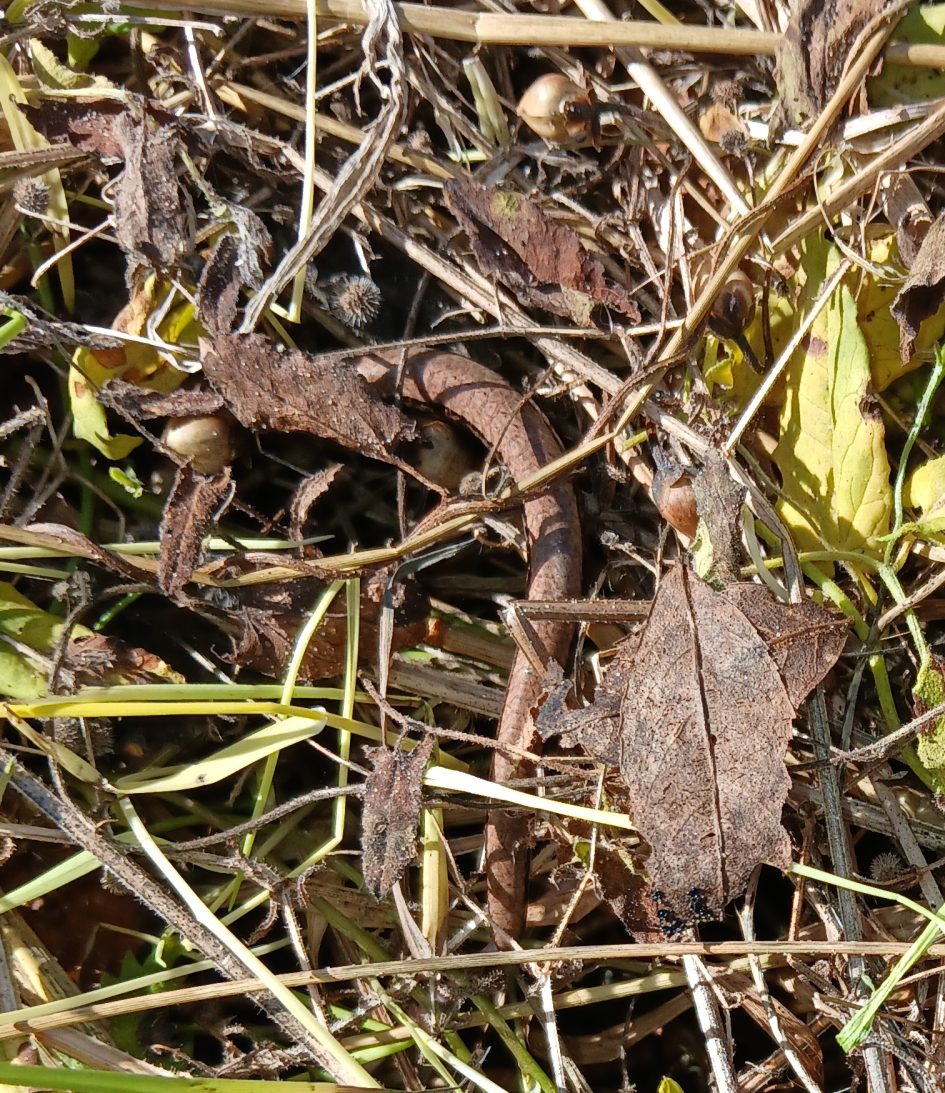
The Slow Worm has proven to be the most iconic of the Tufa Field’s many and diverse inhabitants.
These fetching, often misunderstood reptiles are the flag-bearer for wild spaces, existing quietly in undisturbed grassy and sunny locations. They are voracious feeders of slugs and snails, welcomed by gardeners everywhere for their ability to control numbers and protect food crops and precious decorative plants.
The Tufa Field has been a major home for Slow Worms with a large breeding population. A survey count of 2023 projected an adult population of well over 500 across the site. Indeed it was the indiscriminate slaughter of Slow Worms here that brought the Tufa Field to national prominence and led to a more careful approach to development proposals.
The hot summer of 2026 confirmed this anecdotally with many sightings in adjacent gardens as well as the then undisturbed field. Breeding and reproduction has been enhanced this year, so we hope the population is resilient enough to survive the development.
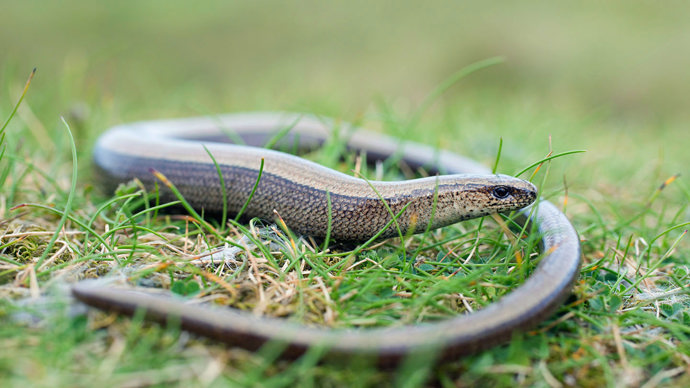
They are of course neither Worm nor Slow. These are our only legless Lizards and can move rapidly, but when their cover is disturbed, they tend to freeze, at least making them visible to us. Fully grown they can reach 50cm long, but ours are typically shorter, perhaps 30cm at most. It takes 3 years for Slow Worms to reach maturity, so there are often many more juveniles than adults. This also compensates for the high rate of predation they suffer. Predators include buzzards and owls, frogs and toads and domestic cats.
Predation and Protection
But the biggest predator is, as usual, humans. Often inadvertent or unthinking, the human removal of habitats, the use of cutting machines in parks and gardens and the use of pesticides drastically reduces the populations that are close to human settlements.
Slow Worms are a protected species and it is illegal to move or kill them without a licence. But there is often a clash between human development land and slow worm habitat. Both share desirable properties and sometimes translocation is chosen as an option to preserve at least some f the population. Carried out carefully and with constant post-movement monitoring, this can be notionally successful as this study showed.
Can our Slow Worms Survive Development?
Efforts have been made by developers to remove Slow Worms from the developed area, using a heavy plastic reptile fence to form a barrier between the field periphery and the main development area. This with refuge areas ( roofing felt or similar) where Slow Worms can congregate allows them to be translocated to the as yet undeveloped areas. This process cannot hope to save all individuals and some casualties are inevitable, resulting in offences being committed. Whether these are pursued remains the responsibility of others.
Through the Year
As October approaches, Slow Worms start to burrow underground, or find crevices to begin their hibernation. In the Tufa Field this makes them particularly vulnerable to excavation in the winter months. They begin to emerge again in late March. April and May are the breeding time, Males become more vividly coloured with blue spots and are also more aggressive. In the UK, it is too cold for eggs to survive in the ground, so these are carried in the female’s body until they mature from an egg sac in June/July. Several young will be born and need to be self-sufficient immediately, although may stay as a group for some time.
This short clip from the BBC shows the reproduction cycle of a Slow Worm.
What you can do
If you live close to a known area for Slow Worms, you can help them by providing leaf litter and long grass at the edges of your property. If you have a compost heap, you may find them there, so add a piece of carpet or roofing felt to the top of the heap. This will enable you to both see them and avoid damaging them, since they will congregate there. Similarly, take great care when cutting your grassy areas and try to avoid machine cutting until you are sure the area is empty. You will be rewarded with the services of one of the great organic slug controllers!







 Total views : 180089

Leave a Reply