Ecology and Biodiversity at the Tufa Field
The Ecology of the Tufa Field is complex and diverse, having developed over the 50 years since the field was last in active cultivation as a dairy cow meadow.
Surrounding land to the south has burgeoned into a rich woodland, and is now the Stirtingale Farm SNCI. The apron to this woodland is the Tufa Field, with a Lowland Grassland characteristic, and supporting the life in the woodland, as well as its own inhabitants.
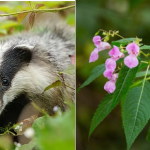
Key species include Reptiles (Slow Worms), Amphibians (Newts, Frogs and Toads), Invertebrates (Moths and Butterflies) and Small and Large Mammals (Voles, Deer, Badgers, Foxes). The entrance to the field is an important Bat corridor.
The Tufa Flushes support calcareous plant life, the surface of the field being either continuously or partially permeated by up to 3 watercourses. The Tufa formations are in their infancy and as such are not particularly prominent, but the continuous flow of water containing high levels of dissolved limestone give rise to conditions only found rarely in the area.
The presence of numerous Garden Ponds around the site periphery supports amphibian breeding and hibernation,underlining their importance in an urban setting..
The 2024 Ecological Impact Assessment records numerous Slow Worm sites,
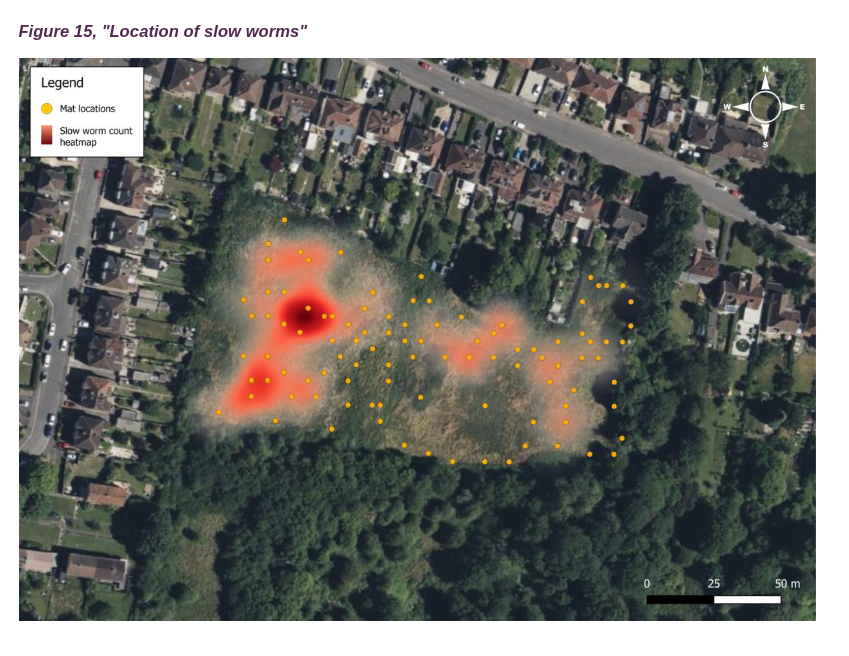
The site contains many species that are of National importance according to the 2023 Environmental impact survey.
“6.2. In the absence of any avoidance, mitigation or compensation measures the development of
the site has the potential to lead to adverse ecological effects of up to ‘large’ significance on
the site’s invertebrate interest.
6.3. In the absence of any avoidance, mitigation or compensation measures the development of
the site has the potential to lead to adverse ecological effects of up to ‘moderate’
significance on bats of the Bath and Bradford on Avon Bats SAC, grassland and
watercourses and non-SAC bats and on the Stirtingale Farm SNCI.
6.4. The potential impacts of the development on badgers, slow-worms and breeding birds
would be of ‘slight’ significance, even in the absence of avoidance, mitigation or
compensation measures.”
Of particular concern are invertebrates including nationally rare and endangered species.
These include :
- Oxycera analis: Dark winged Soldier – (Nationally Rare);
- Oxycera pardalina: Hill Soldier – (Nationally Scarce);
- Eggisops pecchiollii: False Woodlouse Fly – (Nationally Scarce);
- Pipinculus elegans (Nationally Scarce);
- Auplopus carbonarius: Spider Wasp – (Nationally Scarce);
- Campiglossa malaris: Ragwort Campiglossa – (Nationally Endangered);
- Hercostomus plagiatus (Nationally Scarce);
- Oxyna nebulosa: Clouded Daisy Fly – (Nationally Rare);
- Pherbellia griseola: Variable Little Snailkiller – (Nationally Rare);
- Tetanocera punctfrons: Side-striped Buff Snailkiller – (Nationally Scarce).
The EIA is a snapshot, taken at a particular time and under prevailing conditions, and does not pretend to record all species, or identify their likely presence. Local observations have taken place over many years in continuous conditions, so has identified many more species than a quick survey can.
This local record is documented here.
The field has a complex geology and ecology with representatives from large and small mammal groups, birds of all sizes, amphibians, reptiles, invertebrates including moths butterflies and insect life. There is also a huge range of botanical species present in the wet and drier areas in close proximity. Many have made their home here others depend on the site for feeding and breeding, some for transit to other areas, some are unique to the ecology.
A veritable Museum of Life in our midst.
Documenting all of the species is a considerable task and is ongoing so the following tables are constantly being amended and extended. If you spot something we have missed, please let us know.
If you want to know more about a particular species, click on its link.
N.B. On mobile devices, this page is best viewed in Landscape mode.
Mammals
| Name | Last Seen | Number | Class | Scientific Name | Status |
|---|---|---|---|---|---|
Fallow Deer 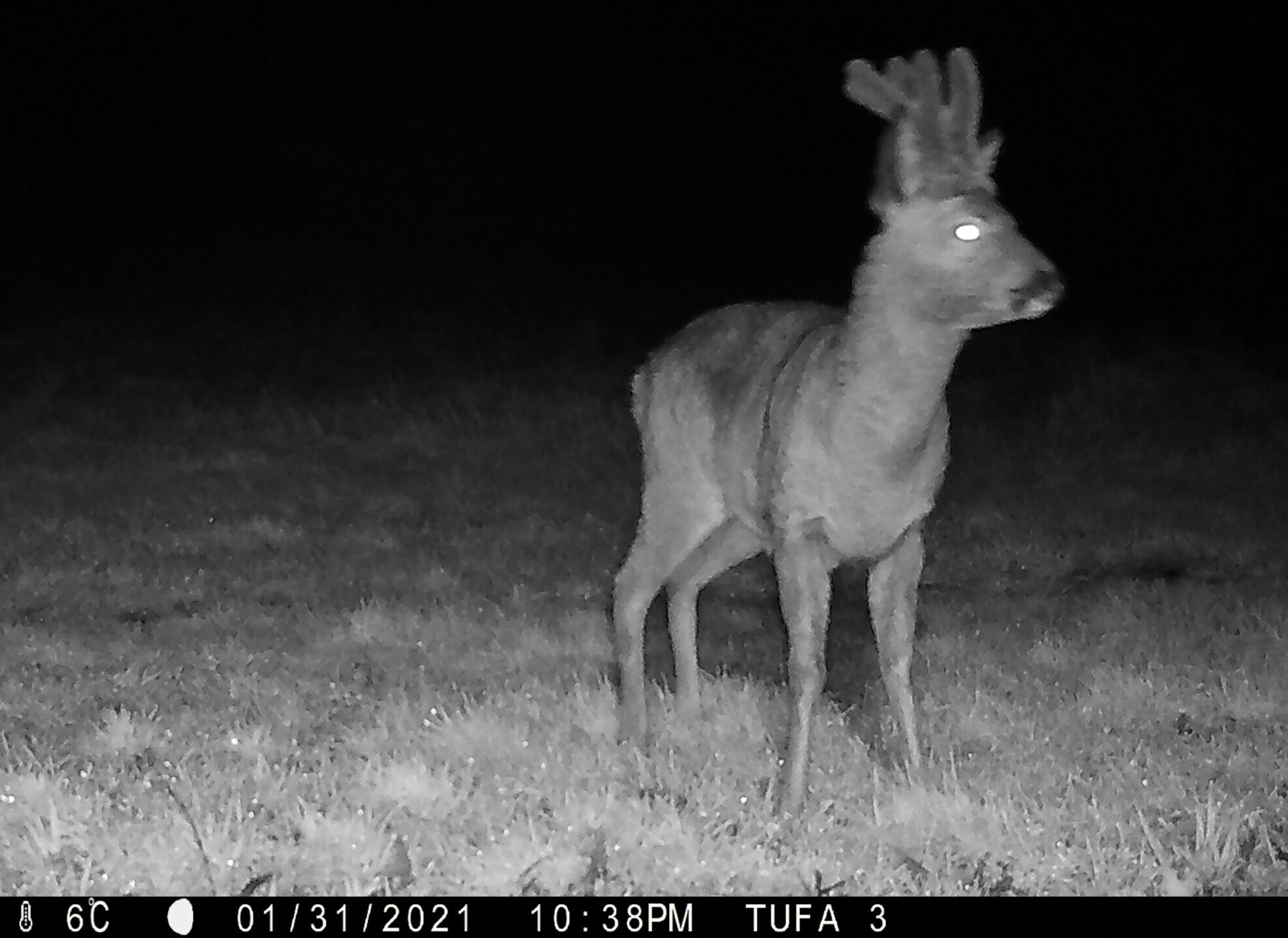 | Daily | 3-4 | Artiodactyla | Dama dama | |
Badger 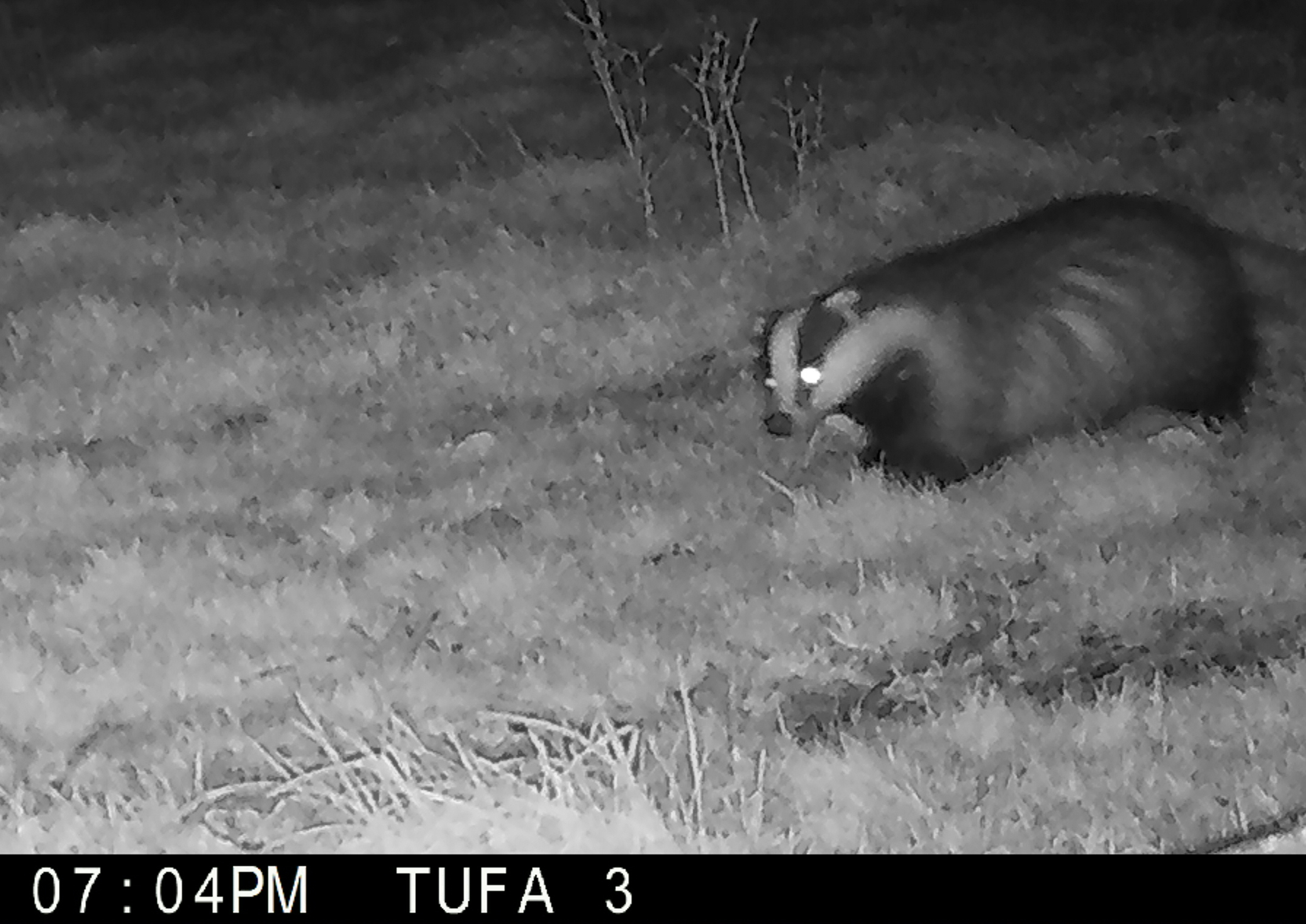 | Daily | 3 setts | Carnivora | Meles meles | Protected |
Fox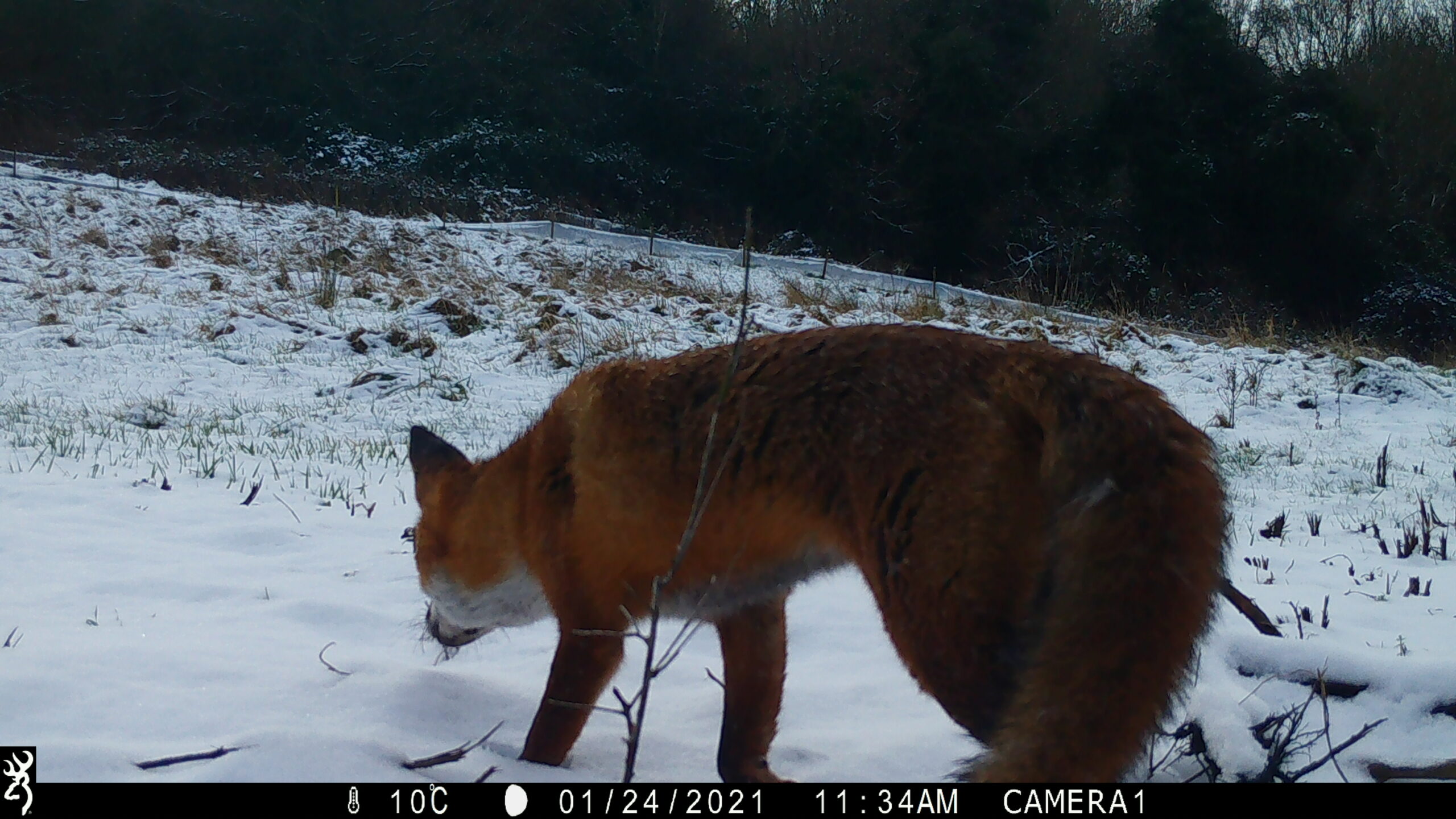 | Daily | 2-3 | Carnivora | Vulpes vulpes | |
Grey Squirrel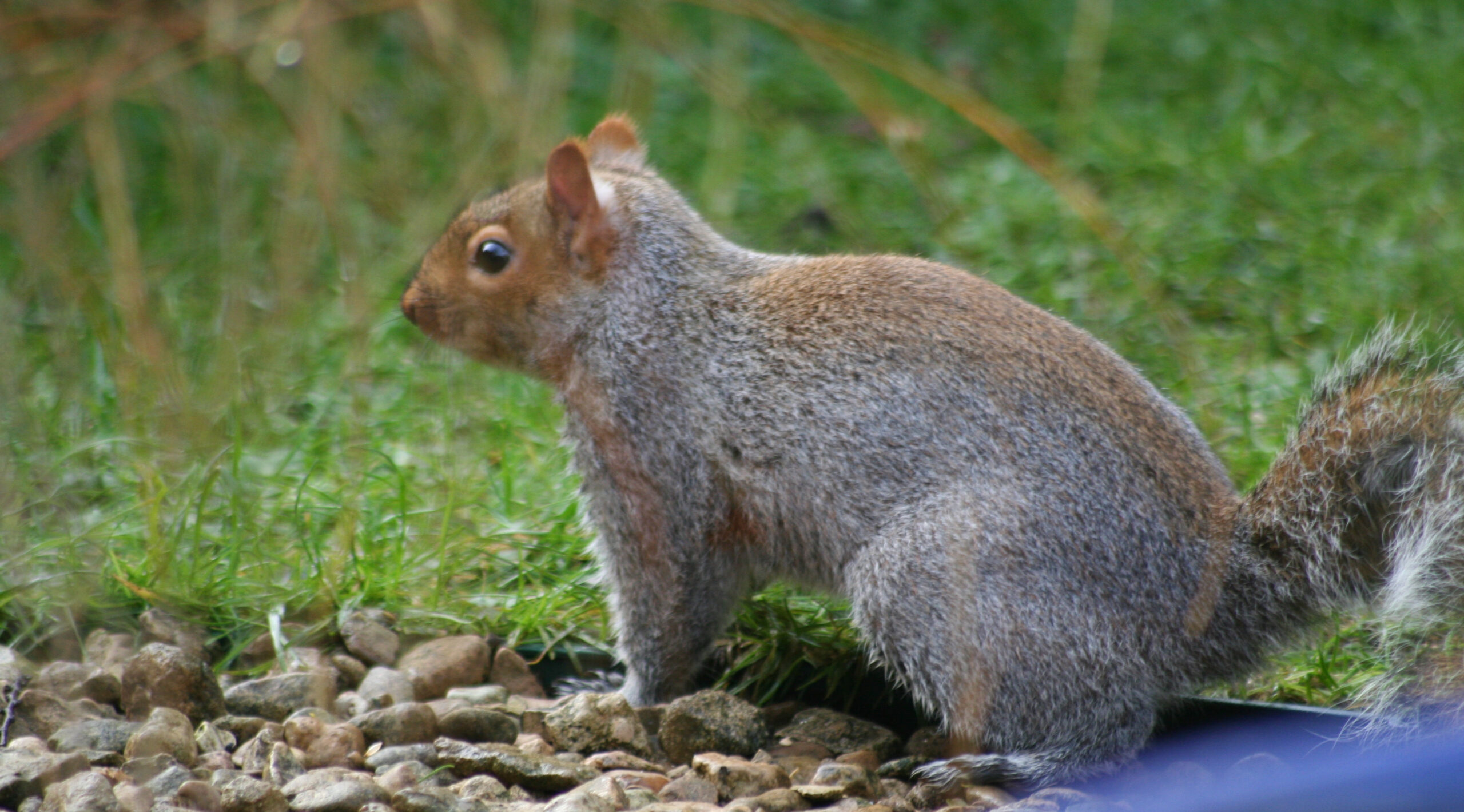 | Daily | many | Rodent | Sciurus carolinensis | |
Field Vole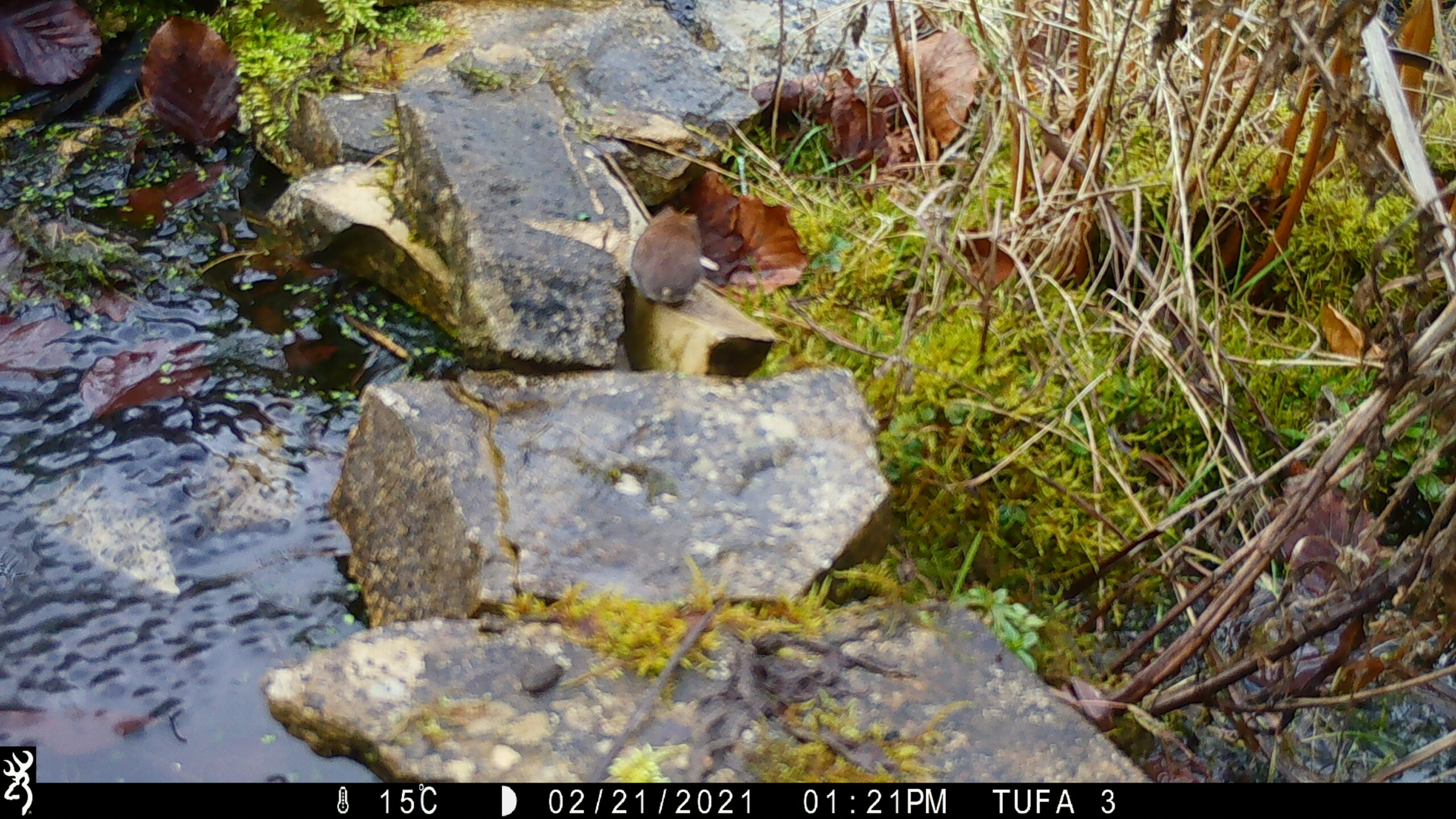 | May 2023 | many | Rodent | Microtus agrestis | |
| Wood Mouse | June 2023 | many | Rodent | Apodemus sylvaticus | |
| Common pipistrelle bat | July 2023 | many | Chiroptera | Pipistrellus pipistrellus | Protected |
| Greater Horseshoe Bat | June 2023 | many | Chiroptera | Rhinolophus ferrumequinum | Protected |
| Muntjac Deer | June 2026 | 1-2 | Artiodactyla | Muntiacus reevesi | Protected |
To see a full list of UK mammals and their status , visit the Mammal Society.
Birds
N.B. All birds are protected by the Wildlife and Countryside Act 1981
Status indicates the conservation status as defined by the RSPB, Red is the highest danger category, through Amber to Green which are the birds which are not showing moderate or severe declines.
| Name | Last Reported | Number | Class | Scientific Name | Status |
|---|---|---|---|---|---|
| Barn Owl | October 2025 | 2 | Owls | Tyto Alba | Green |
| Blackbird | Daily | Many | Thrushes | Turdus Melua | Green |
| Blackcap | Daily | Many | Warblers | Sylvia atricapilla | Green |
| Blue Tit | Daily | Many | Tits | Cyanistes caerulus | Green |
| Bullfinch | May 2026 | 2 | Finches | Pyrrhula pyrrhula | Amber |
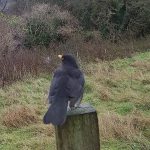
| Buzzard | Daily | 3-4 | Kites, hawks and eagles | Buteo buteo | Green |
| Carrion Crow | Daily | 3-4 | Crows | Corvus corone | Green |
| Chaffinch | Daily | 1-2 | Finches | Fringilla coelebs | Green |
| Chiffchaff | Daily | 1-2 | Warblers | Phylloscopus collybita | Green |
| Coal tit | Daily | 1-2 | Tits | Periparus ater | Green |
| Collared Dove | Daily | 1-2 | Pigeons and Doves | Streptopelia decaocto | Green |
| Common gull | Daily | Many | Gulls and Terns | Larus canus | Amber |
| Dunnock | Daily | Many | Accentors | Prunella modularis | Amber |
| Fieldfare | February 2026 | 2-3 | Thrushes | Turdus pilaris | Red |
| Goldfinch | June 2026 | 1-2 | Finches | Carduelis carduelis | Green |
| Great spotted woodpecker | June 2026 | 1 | Woodpeckers | Dendrocopos major | Green |
| Great tit | Daily | Many | Tits | Parus major | Green |
| Greenfinch | May 2026 | 2-3 | Finches | Chloris Chloris | Red |
| Herring gull | Daily | Many | Gulls and Terns | Larus argentatus | Red |
| Hooded Crow | Weekly | 1-2 | Crows | Corvus cornix | Green |
| House martin | June 2026 | 3-4 | Swallows and martins | Delichon urbicum | Red |
| House sparrow | Daily | 5-6 | Old world sparrows | Passer domesticus | Red |
| Jackdaw | Weekly | 1 | Crows | Corvus monedula | Green |
| Jay | July 2026 | 1 | Crows | Garrulus glandarius | Green |
| Magpie | Daily | 5-6 | Crows | Pica pica | Green |
| Nightingale | June 2025 | 1 | Chats | Luscinia megarhynchos | Red |
| Nightjar | Daily | 1 | Nightjars | Caprimulgus europaeus | Amber |
| Nuthatch | Daily | 1 | Nuthatches | Sitta europaea | Green |
| Pheasant | Weekly | 2-3 | Pheasants and partridges | Phasianus colchicus | Introduced |
| Raven | July 2026 | 1 | Crows and Shrikes | Corvus corax | |
| Red Kite | June 2022 | 1 | Kites, hawks and eagles | Milvus milvus | Green |
| Robin | Daily | 1-2 | Old world flycatchers and chats | Erithacus rubecula | Green |
| Rook | June 2026 | Many | Crows | Corvus frugilegus | Amber |
| Sparrowhawk | October 2025 | 1 | Hawks and Eagles | Accipiter Nisus | Green |
| Song thrush | Daily | 1 | Thrushes | Turdus philomelos | Amber |
| Stock dove | Daily | 5-6 | Pigeons and doves | Columba oenas | Amber |
| Starling | March 2025 | 1-2 | Starling | Sturnus vulgaris | Red |
| Swift | July 2026 | 2-3 | Swifts | Apus apus | Red |
| Tawny Owl | Frequent | 1-2 | Owls | Strix aluco | Amber |
| Treecreeper | Frequent | 1-2 | Treecreepers | Certhia familiaris | Green |
| Woodpigeon | Daily | 5-6 | Pigeons and Doves | Columba palumbus | Amber |
| Wren | Daily | 1-2 | Wrens | Troglodytes troglodytes | Amber |
Amphibians
| Name | Last Reported | Number | Class | Scientific Name | Red list Status |
|---|---|---|---|---|---|
| Common Toad | October 2026 | Many | Bufo Bufo | Least Concern | |
| Common Frog | Daily | Many | Rana Temporaria | Least Concern | |
| Smooth Newt | Daily | Many | Lissotriton vulgaris | Least Concern | |
| Palmate Newt | May 2025 | 5-6 | Lissotriton helveticus | Least Concern | |
Reptiles
| Name | Last Seen | Number | Class | Scientific Name | Status |
|---|---|---|---|---|---|
| Slow Worm | Summer 2026 | Many | Reptiles | Anguis fragilis | Protected |
| Common Lizard | July 2025 | 1-2 | Reptiles | Zootoca vivipara | Priority species |
Invertebrates
| Name | Last Seen | Number | Class | Scientific Name | Red List Status |
|---|---|---|---|---|---|
| Small Blue | July 2026 | 5-6 | Butterflies | Cupido Minimus | Priority Species |
| Meadow Brown | June 2026 | 4-5 | Butterflies | Maniola Jurtina | Common |
| Painted Lady | June 2026 | 4-5 | Butterflies | Vanessa cardui | Common |
| Peacock Butterfly | March 2026 | 1-2 | Butterflies | Aglais Io | Common |
| Common Blue | June 2026 | 3-4 | Butterflies | Polyommatus icarus | Common |
| Small White | July 2026 | 7-8 | Butterflies | Pieris rapae | Common |
| Cinnabar | June 2026 | 2 | Moths | Tyria jacobaeae | Priority species |
| Common blue damselfly | June 2026 | Many | Damselflies | Enallagma cyathigerum | Common |
| Large red damselfly | May 2026 | Many | Damselflies | Pyrrhosoma nymphula | Common |
| Common froghopper | May 2025 | Many | Bugs | Philaenus spumarius | Common |
| Hill soldier fly | June 2018 | 1 | Diptera | Oxycera pardalina | Rare |
| Buff-tailed Bumblebee | Spring 2026 | 3-4 | Bees and Wasps | Bombus terrestris | Common |
| Hairy-footed flower bee | May 2026 | Many | Bees and Wasps | Anthophor plumipes | Common |
| Early bumblebee | March 2026 | 4-5 | Bees and Wasps | Bombus pratorum | Common |
| Garden Bumblebee | Summer 2026 | Many | Bees and Wasps | Bombus hortorum | Common |
| White-tailed bumblebee | Summer 2026 | 4-5 | Bees and Wasps | Bombus lucorum | Common |
| Red-tailed bumblebee | Summer 2026 | 4-5 | Bees and Wasps | Bombus lapidarius | Common |
| Common Carder Bee | Summer 2026 | Many | Bees and Wasps | Bombus pascuorum | Common |
| Honey Bee | Summer 2026 | Many | Bees and Wasps | Apis mellifera | Common |
| Patchwork leaf-cutter bee | Summer 2026 | 4-5 | Bees and Wasps | Megachile centuncularis | Common |
| Red Mason Bee | Summer 2026 | 2-3 | Bees and Wasps | Osmia bicornis | Common |
| Common Wasp | Summer 2026 | Many | Bees and Wasps | Vespula vulgaris | Common |
| Red Ant | Summer 2026 | Many | Ants | Myrmica rubra | Common |
| Yellow Meadow Ant | Summer 2026 | Many | Ants | Lasius flavus | Common |
| Black Garden Ant | Summer 2026 | Many | Ants | Lasius niger | Common |
| Garden spider | June 2026 | Many | Spiders | Araneus diadematus | Common |
| Wolf Spider | July 2026 | Many | Spiders | Pardosa amentata | Common |
| Drone-fly | Regularly | Many | Flies | Eristalis tenax | Common |
| Common banded hoverfly | Summer 2026 | Many | Flies | Syrphus ribesii | Common |
| Heineken fly | Summer 2026 | Many | Flies | Rhingia campestris | Common |
| Marmalade fly | Summer 2026 | Many | Flies | Episyrphus balteatus | Common |
| Clouded Silver | July 2025 | 1 | Moths | Lomographa temerata | Common |
| Gatekeeper | Summer 2026 | 1 | Butterflies | Pyronia tithonus | Common |
| Peacock Butterfly | July 2026 | 1 | Butterflies | Aglais io | Common |
| Silver Studded Blue | July 2026 | 1 | Butterflies | Plebejus argus | Vulnerable |
| Green Lacewing | July 2025 | 1 | Other insects | Chrysoperla carnea | Common |
| Common Mayfly | June 2026 | 3-4 | Other insects | Ephemera danica | Common |
| Speckled Wood | August 2026 | 1 | Butterflies | Pararge aegeria | Common |
| Holly Blue | August 2026 | 1 | Butterflies | Celastrina argiolus | Common |
| Beautiful Demoiselle | July 2026 | 1 | Damselflies | Calopteryx virgo | Least Concern |
| Brindled Beauty | August 2025 | 1 | Moths | Lycia hirtaria | Common |
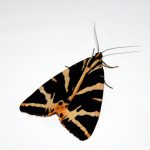
Jersey Tiger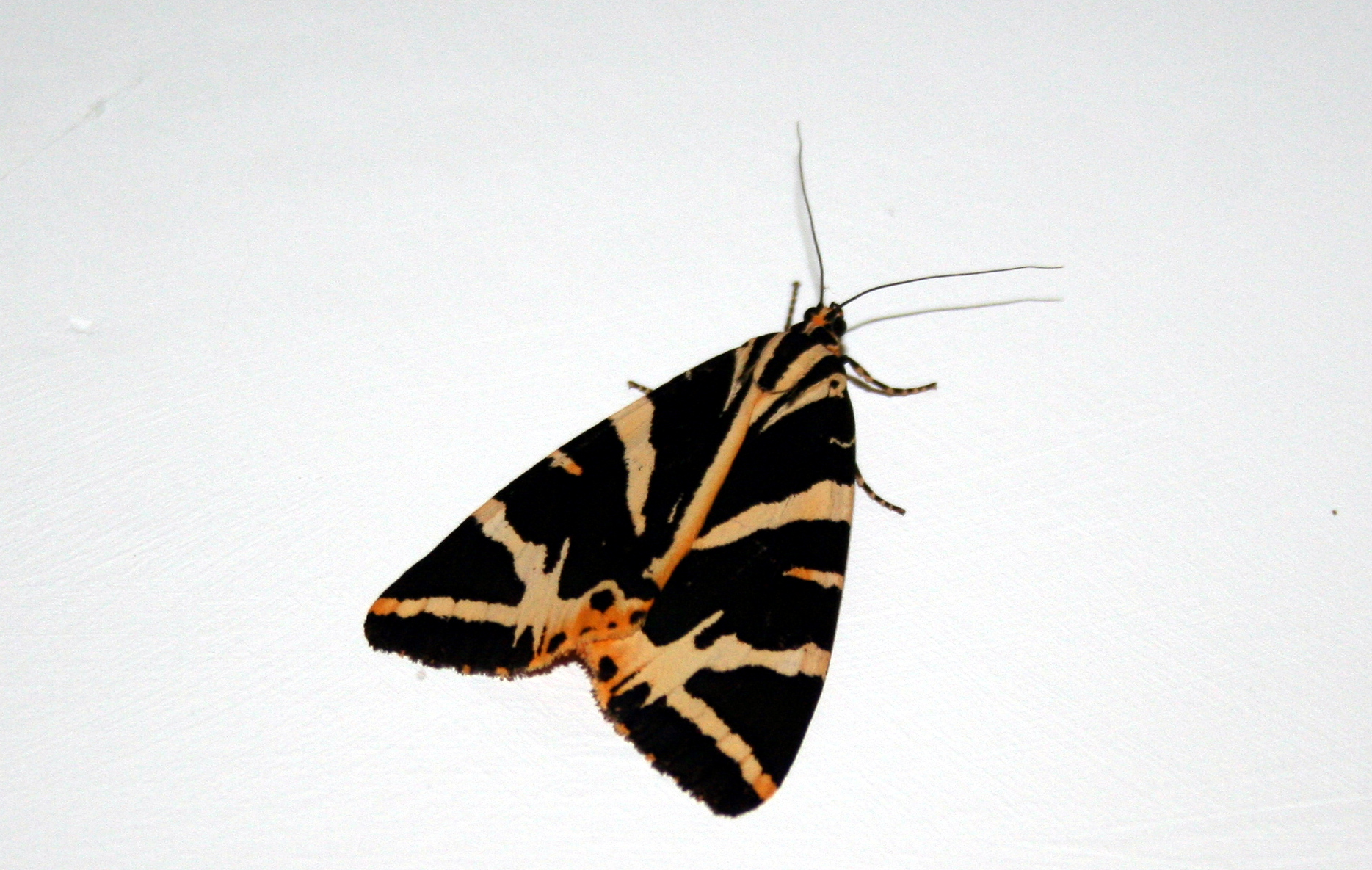 | July 2026 | 1 | Moths | Euplagia quadripunctaria | Nationally Scarce |
Plants
| Name | Last Reported | Number | Category | Scientific Name | Status |
|---|---|---|---|---|---|
| Agrimony | Summer 2026 | Many | Wildflowers | Agrimonia eupatoria | Common |
| Bath Asparagus | Summer 2022 | 4-5 | Wildflowers | Ornithogalum pyrenaicum | Uncommon |
| Buddleia | Summer 2026 | 1 | Trees and Shrubs | Buddleja davidii | Introduced, naturalised |
| Bittersweet | Summer 2026 | Many | Wildflowers | Solanum dulcamara | Common |
| Cow parsley | Summer 2026 | Many | Wildflowers | Anthriscus sylvestris | Common |
| Common Sorrel | Summer 2026 | 5-6 | Wildflowers | Rumex acetosa | Common |
| Great Bindweed | Summer 2026 | Many | Wildflowers | Calystegia sylvatica | Common, non-native |
| Field Bindweed | Summer 2026 | Many | Wildflowers | Convolvulus arvensis | Common |
| Great Willowherb | Summer 2026 | Many | Wildflowers | Epilobium hirsutum | Common |
| Hogweed | Summer 2026 | Many | Wildflowers | Heracleum sphondylium | Common |
| Hedge Parsley | Summer 2026 | Many | Wildflowers | Torilis Japonica | Common |
| Ragwort | Summer 2026 | Many | Wildflowers | Senecio jacobaea | Common |
| Red Bartsia | Summer 2026 | Many | Wildflowers | Odontites verna | Common |
| Spear Thistle | Summer 2026 | Many | Wildflowers | Cirsium vulgare | Common |
| Stinging Nettle | Summer 2026 | Many | Wildflowers | Urtica dioica | Common |
| Teasel | Summer 2026 | Many | Wildflowers | Dipsacus fullonum | Common |
| White Briony | Summer 2026 | Many | Wildflowers | Bryonia dioica | Common |
| Woolly Thistle | Summer 2026 | Many | Wildflowers | Cirsium eriophorum | Common |
| Yellow Rattle | Summer 2026 | Many | Wildflowers | Rhinanthus minor | Common |
| Yorkshire Fog | Summer 2026 | Many | Grasses Sedges and Rushes | Holcus lanatus | Common |




 Total views : 183526